Message to the Justice Conference on Iran’s 1988 Massacre


On the occasion of the 38th anniversary of the 1988 massacre of political prisoners, an international conference titled “Ongoing Crimes Against Humanity: Political Executions in Iran and the Responsibility to Act” was held on September 4, 2026. This online conference was organized at the initiative of the Justice for the Victims of the 1988 Massacre in Iran (JVMI) foundation in Paris.
The event featured prominent jurists, leading human rights experts, international prosecutors, and former UN officials. Among the speakers were Professor Javaid Rehman, former UN Special Rapporteur on Iran; Stephen Rapp, former US Ambassador-at-Large for Global Criminal Justice and Chief Prosecutor of international tribunals; Professor Claudio Grossman, member of the UN International Law Commission; Dr. Mark Ellis, Executive Director of the International Bar Association; Dr. Grażyna Baranowska, member of the UN Working Group on Enforced or Involuntary Disappearances; and Leopoldo Maldonado Gutiérrez, UN Special Rapporteur on the Freedom of Opinion and Expression.
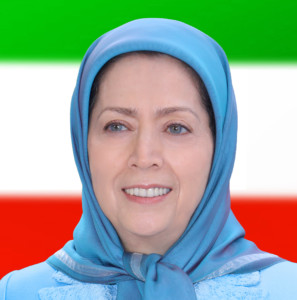
In a video message to the conference, Maryam Rajavi pointed to the recent wave of political executions in Iran, describing it as the direct result of the impunity enjoyed by the perpetrators of the 1988 massacre.
Participating jurists and international figures emphasized the imperative to end decades of impunity for the orchestrators and perpetrators of the 1988 massacre, calling for an immediate halt to executions in Iran.
Key points from Maryam Rajavi’s message included:
- The Link Between Current Executions and the 1988 Massacre: The regime’s replication of the 1988 pattern of repression and mass killing stems from its dread of popular uprisings and its strategy to instill fear across society.
- The Stance of the Call for Justice Movement: The central role of the Call for Justice movement for the victims as an integral component of the strategy to overthrow the regime and establish democracy.
- The Commitments of the NCRI for Tomorrow’s Iran
Below is the text of Mrs. Maryam Rajavi’s message to the conference:
Maryam Rajavi: The Movement for Justice is an Integral Part of the Struggle of the People of Iran to Overthrow the Clerical Regime
At a time of increasing political executions, we mark the 38th anniversary of the 1988 massacre of political prisoners in Iran.
Khomeini’s order was clear: all PMOI prisoners who remained firm in their beliefs had to be executed. But later, the executions also included other political prisoners. However, 90 percent of those executed were affiliated with the PMOI.
They are the spirit of resistance that continues from one generation to the next, as they rise for freedom.
In August 1988 in a letter to the UN Secretary General, Massoud Rajavi the leader of the Iranian Resistance, stated: “According to reliable information, several weeks ago, Khomeini issued a handwritten order for the execution of political prisoners who supported the PMOI.”
As the late Baroness Boothroyd said, “The 1988 massacre was the largest massacre of political prisoners since the Second World War.”
In 2024, the United Nations Special Rapporteur on Iran, Professor Javaid Rehman, described it as a crime against humanity and genocide.
However, the world remained silent and failed to act. As a result, those who ordered and carried out the massacre have enjoyed complete impunity until today.
The Pattern of the 1988 Massacre Is Being Repeated
Today, we are facing new human rights crimes that follow the same pattern. After killing protesters during the January 2026 uprising, the regime used the conditions of war to begin a new wave of executions in fear of another uprising.
Just as in 1988, on one side we see the brutality of the regime. On the other side, we see the resistance of political prisoners who remain firm in their beliefs.
Vahid Bani Amerian was one of those recently executed. In a video sent from inside prison, he addressed the regime’s Supreme Leader and said:
“Be certain that if you execute me and people like me, more of us will rise. This will happen even if you hide our bodies. And be certain that your regime will not escape being overthrown.”
When he was asked to express regret so that he would not be executed, he said:
“I declare loudly that, for the freedom of Iran, I will not bargain with you over my life.”
He then added:
“My final words to you, the executioners, are these: your nature is the same evil nature of executioners in 1988. And our answer is this: if staying alive means giving up the name of the People’s Mojahedin, then shame on such a life.”
Pouya Ghobadi was another political prisoner who was recently executed. Ten days after the January 2026 uprising began, he wrote in a letter from inside prison:
“If I were outside prison today, it would be my duty to fight in the frontlines of the people’s protests. From the depth of my heart, I join the heroic people in shouting: Down with the oppressor, whether it is the Shah or the mullahs’ Leader!
“I swear that, on the path to freedom for my people, I will never surrender to this regime of executions and massacres.”
These are not isolated examples. They represent Iran’s young generation. In recent months, at least 40 political executions have taken place, and many more prisoners are waiting to be executed.

Effort by the Iranian Regime to Terrorize the People
These executions are carried out in flagrant violation of international law and due process. However, their main reason is not the prisoners’ cases, but the regime’s need to execute.
The remnants of the regime want to frighten a generation that has entered the struggle to overthrow it.
The movement for justice is part of the Iranian people’s movement to overthrow the regime and achieve a democratic revolution.
As a result of these efforts, last year, for the first time, United Nations member states officially recognized the unlawful and arbitrary executions of 1988 in the UN General Assembly’s annual resolution on Iran.
This is an important first step but justice requires binding decisions and much more serious actions.
Justice in the Free Iran of Tomorrow
In complete contrast to the regime, the National Council of Resistance of Iran has made the following commitments in its program:
– The death penalty will be abolished.
– There will be an independent justice system and an independent judiciary, based on international standards, including presumption of innocence, right to public defense and independence of judges.
– The mullahs’ religious laws will be abolished, and the so-called Revolutionary Courts will be dissolved.
– Unfortunately, most of the perpetrators of 1988 massacre who have been involved in crimes against humanity, genocide and terrorism during the past four decades, are still in positions of power today.
As the UN Special Rapporteur, Professor Javaid Rehman, courageously called for in his July 2024 report, on behalf of the Iranian Resistance, I urge all governments to take the following actions:
First, create an international mechanism to bring those responsible for the 1988 massacre to justice.
Second, use universal jurisdiction to prosecute those responsible for this massacre.
In addition, we call on all governments to make their trade and diplomatic relations with the regime dependent on an immediate end to the executions and the release of all political prisoners.
Governments must also make sure that every international agreement with this regime includes a binding and verifiable end to executions.
On December 12 last year, I attended the Last Post ceremony at the Menin Gate in the city of Ypres, Belgium.
There, I laid flowers in memory of the soldiers of European nations who have no known names and no known graves.
At that moment, my heart and mind were filled with the memory of the 30,000 political prisoners massacred in Iran. To this day, no one knows where they are buried.
So many grieving mothers died while still hoping to find the graves of their children.
Honoring the victims is also a tribute to the determination of a people who have been covered in blood many times, but who have never given up their struggle for freedom.
They will certainly achieve freedom.
- Tags: 1988 Massacre, Maryam Rajavi, mullahs' regime, NCRI
- Conference Commemorating the 36th Anniversary of the 1988 Massacre of Political Prisoners, with the Presence of Ms. Rita Süssmuth and Distinguished European Figures
- Maryam Rajavi’s speech at the conference, entitled “Four Decades of Crime against Humanity and Impunity from Punishment,”
- Seeking justice for victims of 1988 massacre is indispensable for the Iranian nation’s campaign to overthrow the regime in Iran