Letter to the UN Secretary-General on the Occasion of the World Day Against the Death Penalty


Call for an International Initiative to Halt Executions, Killings, and Crimes Against Humanity in Iran
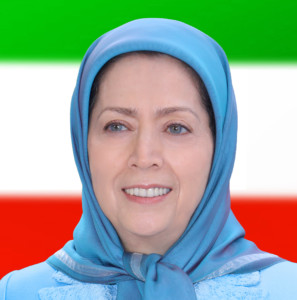
On the eve of 10 October, the World Day Against the Death Penalty, Mrs. Maryam Rajavi, in a letter addressed to United Nations Secretary-General António Guterres, called for urgent international action to stop executions and the killing of protesters in Iran.
Mrs. Rajavi urges the UN Secretary-General to take the lead in a coordinated international initiative aimed at the immediate cessation of executions and the killing of protesters. The demands outlined in her letter include:
• Recognition of the crimes described as genocide and crimes against humanity;
• Establishment of an independent international criminal justice mechanism;
• Prosecution of those responsible for these crimes, including through the application of the principle of universal jurisdiction;
• Referral of Iran’s human rights violations to the United Nations Security Council, and referral of related criminal cases to the International Criminal Court and other competent judicial bodies;
• Ensuring unhindered access for UN investigative bodies to prisons, victims, and witnesses.
She also called on governments to make their economic, political, and diplomatic relations with the Iranian regime conditional upon an end to executions and the killing of protesters, and to incorporate a binding requirement to halt executions in any international agreement concerning Iran.
The text of the letter follows:
6 October 2026
Your Excellency,
I address you on behalf of a Resistance movement that, since the 1980s, has seen over 100,000 of its members executed, tortured to death, or killed in targeted attacks by the ruling religious dictatorship. On the eve of October 10, the World Day Against the Death Penalty, I draw the urgent attention of the United Nations to an unprecedented surge in executions, particularly of political prisoners, in Iran.
Furthermore, I bring to your immediate attention the ongoing killings, arbitrary detentions, torture, and death sentences levied against participants in nationwide uprisings across Iran.
1. These atrocities are not a series of isolated violations or sporadic acts. A vast body of credible information gathered daily by the Iranian Resistance from across the country, further corroborated by official reports from United Nations bodies and reputable international organizations, confirms that the Iranian regime has intensified its use of torture, enforced disappearances, mass and arbitrary detentions, and the death penalty as deliberate tools of political repression to instill fear throughout society, suppress popular protests, and preserve its rule against the imminent threat of collapse.
2. The number of executions in Iran has followed an alarming upward trajectory in recent years. Over the past year, the clerical regime recorded the highest number of political executions since 1988.
The number of documented executions during the Iranian calendar year 1404 (March 20, 2025 – March 19, 2026) reached 2,657. Two-thirds of these executions, 1,730 cases, took place within the five-month span between September and February, corresponding to the months immediately preceding and following the nationwide uprising in January. The figure for 1404 represents approximately a 130% increase compared to 1403 (1,159 executions), a 226% increase compared to 1402 (815 executions), and a 280% increase compared to 1401 (699 executions).
At least 60 women and six individuals who were children at the time of the alleged offense were among those executed in 1404. Owing to the regime’s systematic opacity and non-disclosure of many executions, these figures must be regarded as a conservative minimum. The actual number of executions is significantly higher.
3. Even more alarming than the overall rise in executions is the expanding scope of political executions and the targeting of individuals linked to public protests. These executions surged in the midst of foreign war. Since March 19, 2026, to date, at least 46 political prisoners, including 9 members of the People’s Mojahedin Organization of Iran (PMOI/MEK) and 37 individuals arrested during nationwide uprisings and social protests, have been executed.
In August 2026, the UN High Commissioner for Human Rights expressed grave concern over the execution of 27 individuals in cases linked to the protests that erupted earlier this year. More than 100 others face imminent execution under similar charges. The High Commissioner also highlighted severe due process violations, including forced confessions extracted under torture, executions carried out mere weeks after arrest, and the sentencing of 12 co-defendants in a brief, closed-door trial lasting only three hours.
This marks the first time since the 1988 massacre that 46 political prisoners have been executed within a six-month period. This escalation signals a clear return by the clerical regime to the pattern of mass political executions that characterized the 1980s.
4. Viewing its primary conflict as one waged against the Iranian people, their uprisings, and the organized Resistance, the regime turned to executing members of the PMOI/MEK amidst the ongoing foreign war.
At Ghezel Hesar Prison, six PMOI members were executed in rapid succession:
Mohammad Taghavi, 59, a former political prisoner from the 1980s and 1990s, and Akbar Daneshvarkar, 60, a civil engineer, executed on March 30, 2026.
Babak Alipour, 34, a jurist, and Pouya Ghobadi, 34, an electrical engineer, executed on March 31, 2026.
Vahid Bani-Ameriyan, 33, an electrical engineer, and Abolhassan Montazar, 67, an architect and former political prisoner under the Shah’s regime, executed on April 4, 2026.
In addition, three more PMOI members were executed in the Central Prison of Karaj: Hamed Validi, 45, a civil engineer, and Mohammad (Nima) Masoum-Shahi, a skilled technician, were executed on April 20, 2026; and Mehdi Khanaki, 26, a law graduate, was executed on July 22, 2026.
5. Thousands of prisoners in Iran currently face the death penalty or are at imminent risk of execution. On February 12, 2026, Amnesty International warned that thousands of Iranians were at risk of execution. Additional documentation indicates that at least 7,000 prisoners across the country are currently under sentence of death, though the exact figure remains unclear due to the regime’s systematic lack of transparency.
The alarming scale of death sentences is underscored by two separate hunger strikes undertaken by 1,500 death-row prisoners at Ghezel Hesar Prison in Karaj. The first hunger strike took place from October 13 to October 19, 2025, and the second began on July 12, 2026, lasting for 16 days.
6. Death sentences are imposed and carried out in circumstances where most defendants are routinely denied effective and timely access to legal counsel of their choice, adequate time to prepare a defense, a fair and public trial before an impartial tribunal, the right to a meaningful appeal, and an independent investigation into allegations of torture. The use of vague charges such as Moharebeh (enmity against God), Efsad-e fel-Arz (corruption on Earth), and Baghi (armed rebellion) to criminalize political activity, protest, or affiliation with opposition groups is incompatible with the principle of legality (nullum crimen, nulla poena sine lege) and fundamental fair trial standards.
The leaders and officials across all factions of the regime act in full collusion and consensus in perpetrating these atrocities. In remarks published in Eghtesad Online on November 4, 2024, Masoud Pezeshkian, the current president of the clerical regime, publicly endorsed the execution policy, stating: “We execute someone who has killed ten people, and they claim we violated human rights.”
7. In parallel with the executions, the killing of protesters and the unjust, inhumane punishment of participants in nationwide uprisings continue unabated. This pattern of killings is a recurring practice resulting from the structural impunity enjoyed by both perpetrators and commanders. According to statistics compiled by the Iranian Resistance:
• In the December 2017-January 2018 uprising: Dozens of individuals lost their lives, and at least 8,000 were detained;
• In the November 2019 uprising: More than 1,500 people were killed and over 12,000 were arrested. The Iranian Resistance has published the names of 857 victims killed during the November 2019 uprising;
• In the 2022 uprising: More than 750 protesters were killed, and the number of detentions was estimated at approximately 90,000. The PMOI published the names and details of 647 of those killed;
• In the January 2026 uprising: The number of those killed reached several thousand, with at least 50,000 individuals arrested. During this uprising, killings were carried out across all 31 provinces, particularly in Tehran, Karaj, Mashhad, Isfahan, and Rasht. Security forces fired assault weapons into crowds from rooftops and elevated positions. In several instances, they trapped protesters in narrow passages using tear gas before opening fire on them. Furthermore, they did not refrain from killing or abducting wounded protesters from hospitals.
On February 17, 2026, Judiciary Spokesperson Asghar Jahangir was quoted in Entekhab News as saying that 8,843 indictments had been issued against those arrested. He added that these indictments spanned all 31 provinces and that courts were processing the cases on a round-the-clock basis.
These very cases, marked by severe violations of due process, rushed trials behind closed doors, vague security charges, coerced confessions under torture, and the denial of independent legal representation, have systematically culminated in a wave of death sentences and lengthy imprisonment terms for participants in the uprising.
8. The regime’s machinery of executions and repression and its judiciary, which operates as an integral arm of the repressive apparatus, exploited the war conditions that broke out on February 28 to intensify domestic repression.
• Gholamhossein Mohseni-Eje’i, the regime’s judiciary chief, who has been a leading official involved in executions and mass killings over the past 45 years, including the 1988 massacre, was quoted in Mizan News Agency on April 13, 2026, as saying: “…The judiciary adopts a wartime posture in handling cases involving collaborators with the enemy until further notice, and is governed by wartime protocols rather than the rules of normal conditions…”
• In a report by state-run website Tabnak on April 19, 2026, Mohseni-Eje’i, during a meeting with judicial officials on April 19, 2026, declared: “…Cases involving infantry forces and collaborators with the enemy… must be handled through summary proceedings at all stages and levels, whether in prosecutors’ offices, trial courts, or the Supreme Court… Now that the judiciary has adopted a wartime posture, when a magistrate hands over a case file to law enforcement officials in the morning to complete the investigation, they must demand its return that very afternoon—not a week later, nor ten days later. If necessary, the interrogating magistrate should step out of his office, go directly into the prison, identify the defendant, conduct the questioning and investigation, formally issue charges, take the final defense, and issue the indictment immediately.
If the appellate courts are genuinely overburdened, the provincial Chief Justice himself, accompanied by two advisory judges, should directly intervene. We no longer have days or nights, nor holidays. At every stage, cases must be processed under extraordinary procedures.”
• Mohseni-Eje’i, speaking on April 30, 2026, and quoted in Mizan News Agency on April 30, 2026, stressed, “…Those acting as the enemy’s infantry, whether domestically or abroad, must be prosecuted; they must be swiftly identified and summarily tried.” He further emphasized that he would pay no heed to critics of the death penalty, asserting: “We will carry out any punishment
• IRINN News Network TV, March 6, 2026, carried the comments by Salar Abnoosh, a senior military official serving as the Deputy Coordinator and Vice Commander of the Khatam-al Anbiya Headquarters, who boasted: “…Anyone on Iranian soil today who utters a single word that echoes the enemy has effectively signed their own shoot-on-sight order.”
• Morteza Simiyari, an official within the judicial apparatus, made a televised statement on state broadcasting on March 6, 2026, asserting: “…Our judiciary stands prepared to execute actions against terrorists reminiscent of 1988—that is, precisely as we dealt with the PMOI group.” This was a direct reference to the 1988 massacre of 30,000 political prisoners carried out pursuant to a decree by the regime’s founder, Ruhollah Khomeini, approximately 90 percent of whose victims were members of the PMOI.
• The same judicial official revealed on state television’s Channel 1 on March 24, 2026, that the regime’s security apparatus had urged the armed forces to deal with protesters in the same manner as the 1988 massacre of political prisoners. Quoting Abolfazl Shekarchi, spokesperson for the General Staff of the Armed Forces, he stated: “…We will crush them [the opposition and protesters].”
9. Concurrently, the regime urgently intensified street-level security controls to suppress popular protest movements. On March 24, 2026, Tabnak quoted police spokesperson Brig. Gen. Saeed Montazerolmahdi stated: “The Law Enforcement Forces have established 1,463 specialized checkpoints across the country, with nearly 15,000 mobile and motorcycle patrol units operating continuously… In addition, over 129,000 police personnel, comprising emergency response teams, relief units, special units, and traffic police, are deployed on around-the-clock duty.”
According to an IRINN News Network TV, on March 26, 2026, Rahim Nadali, the Cultural Deputy of the Revolutionary Guard Corps (IRGC) in Tehran, admitted that the regime is utilizing children as young as 12 years old for intelligence and security patrols as well as staffing checkpoints.
10. As the explicit threats by regime officials demonstrate, the current pattern of executions and mass killings cannot be viewed in isolation from the 1988 massacre of political prisoners. That massacre was carried out in absolute secrecy following brief, minutes-long interrogations by the so-called “Death Commissions.” Subsequently, all information and details regarding this atrocity, from the identities of those executed to the locations of their mass graves, were systematically concealed by the regime. This cover-up continues unabated 38 years later.
The campaign for justice for the victims of the massacre began in the very first weeks after the killings started, with telegrams from Mr. Massoud Rajavi, the leader of the Iranian Resistance, to the UN Secretary-General and the disclosure of Khomeini’s decree ordering the massacre of PMOI members.
Between August 3, 1988, and March 1989, Mr. Rajavi sent 10 urgent telegrams to then-UN Secretary-General Javier Pérez de Cuéllar, detailing this massive crime and requesting immediate UN action. Since that time, alongside hundreds of reports and disclosures, the Iranian Resistance has published 24 books documenting this massacre with precise and verified evidence. The list containing the names of more than 5,000 massacred PMOI members, provided as an enclosure to this letter, is drawn from one of these published volumes.
Excellency,
As you are aware, United Nations bodies and Special Rapporteurs have in recent years confirmed an ongoing pattern of crimes against humanity and genocide committed by the clerical regime over the past 45 years, including:
• On July 17, 2024, Prof. Javaid Rehman, then-UN Special Rapporteur on the Situation of Human Rights in Iran, declared that the summary, arbitrary, and extrajudicial executions of 1981–1982 and 1988 constitute crimes against humanity, including murder and extermination, as well as genocide. Emphasizing that numerous current regime officials, including the Supreme Leader, were directly involved in these massacres, he called for the establishment of an independent international investigative and accountability mechanism.
• The December 2025 United Nations General Assembly Resolution, for the first time, explicitly cited the extrajudicial and arbitrary executions of 1988 and the ongoing structural impunity enjoyed by the perpetrators.
• In its March 8, 2024, report, the UN Independent International Fact-Finding Mission stated that the violent suppression of peaceful protests in Iran led to serious human rights violations by the Islamic Republic, many of which amount to crimes against humanity.
• In its September 17, 2026, the Fact-Finding Mission stated that many acts of repression against protesters in the January 2026 uprising constitute crimes against humanity, including murder, imprisonment, torture, and other inhumane acts committed as part of a widespread and systematic attack directed against a civilian population.
• In its September 16, 2026, report, Amnesty International affirmed that the killing of protesters during the 2022 uprising constitutes crimes against humanity, warning that the normalization of mass killings in the suppression of protests in Iran has enabled the recurrence of such atrocities. Amnesty International called on the UN General Assembly to establish an international criminal justice mechanism to investigate and prosecute individuals bearing the greatest responsibility for these crimes against humanity.
In light of the foregoing considerations:
In the name of the countless selfless women and men who, across successive generations over the past 45 years, have struggled for freedom and the establishment of a democratic republic;
In the name of tens of millions of Iranians enduring their lives under the tyranny, poverty, and calamity imposed by the religious dictatorship;
In view of the imminent threat of execution facing political prisoners and protesters, and the complete absence of domestic avenues for investigation and accountability;
And on behalf of a Resistance movement that has been and remains the primary target of political executions in Iran, and which advocates for a future Iran based on the abolition of the death penalty, the dismantling of the mullahs’ sharia laws, and the dissolution of the Revolutionary Courts as well as all apparatuses of repression, killing, and espionage;
I urge you to lead an international initiative, working with Member States, the General Assembly, the Security Council and the Human Rights Council, to combat impunity in Iran and achieve the following objectives:
1. Compelling the Iranian authorities to halt executions immediately, particularly those of political prisoners, and to end the killing of protesters through effective political, legal and diplomatic measures, including incorporating a requirement to halt executions into any international agreement concerning Iran.
2. Recognizing the executions of 1981, the 1988 massacre of political prisoners, and the killing of protesters in November 2019, 2022, and 2025–2026 as genocide and crimes against humanity.
3. Establishing, through the UN General Assembly, an independent international criminal justice mechanism to investigate international crimes committed in Iran, collect evidence, identify those responsible and the perpetrators, and hold them accountable.
4. Ending impunity for the regime’s leaders, including by bringing them to trial before national courts under the principle of universal jurisdiction.
5. Referring the dossier on grave human rights violations in Iran to the UN Security Council, and referring cases of crimes against humanity and genocide, as well as those who ordered and perpetrated these crimes, to the International Criminal Court and other competent international bodies.
6. Exerting effective pressure on the Iranian authorities to grant the UN Special Rapporteur on the Situation of Human Rights in Iran, the Independent International Fact-Finding Mission, and other independent international mechanisms and experts unimpeded access to prisons, detention centers, victims and witnesses of these crimes.
7. Calling on Member States, through the General Assembly, its Third Committee, the Human Rights Council and other UN bodies, to make economic, political and diplomatic relations with the Iranian regime conditional on an end to executions and the killing of protesters.
Sincerely,
Maryam Rajavi
cc:
– Mr. Volker Türk, United Nations High Commissioner for Human Rights.
- Tags: 1988 Massacre, Executions, Maryam Rajavi, NCRI