Women in Political Leadership


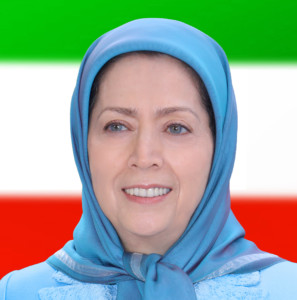
Women in Political Leadership is a comprehensive report on the International Women’s Day conference in Paris, featuring a keynote address by Maryam Rajavi.
In this speech, Maryam Rajavi addresses the critical need for women to hold positions of political leadership in society, tackling pivotal questions such as:
– Why do we define women as the force for change?
– How does women’s participation in political leadership intertwine with democracy?
– What can we learn from the firsthand experiences of women in the Iranian Resistance?
In addressing these issues, Maryam Rajavi emphasizes that in today’s world, amidst the most devastating conflicts and humanitarian crises—from the war in the Middle East to the war in Ukraine—innocent women and children are, as always, the primary victims. Consequently, the definitive solution lies in the active participation of women in the struggle for freedom. In Iran, this means the direct involvement of women in overthrowing the ruling religious tyranny and fundamentalism, a goal in which the combatant women of Iran play a decisive role.
In another section of the book, Maryam Rajavi addresses the concept of gender equality—noting that while it has been widely accepted in theory and integrated into the laws of most nations, true equality remains the fundamental challenge of our time. She asks, “What must be done, and what is the path to achieving it?”
Drawing from the movement’s journey, she contends that the fight against dictatorship—specifically the ruling Islamic fundamentalism in Iran—and the struggle for equality are inseparable. True liberation for women cannot be realized without their direct involvement in confronting the misogynistic clerical regime. Conversely, dismantling a religious tyranny is impossible without unleashing the vast energy of vanguard women and men.
Achieving genuine equality requires entirely casting aside reactionary perspectives that view women as commodities. In their place, a culture and relationships must be established where a woman is defined neither by dependency nor ownership, but as an independent being with the agency to choose, shape her own destiny, and lead the world toward a brighter future. Ultimately, a progressive movement seeking to defeat a religious dictatorship must fully confront any reactionary ideology rooted in gender discrimination and self-interest; it cannot afford to harbor remnants of such a mindset within its own philosophy or relationships.
In conclusion, she poses a fundamental question: Is women’s hegemony a premature transformation? Should this shift not be deferred to future decades, when modern societies have reached higher levels of social evolution?
Maryam Rajavi states: “Our response is that shattering the spell of inequality is impossible without a quantum leap. This leap is women’s hegemony—a transformation that became profoundly necessary due to our struggle against a misogynistic tyranny, and upon which the active and equal participation of women in political leadership and all other spheres of responsibility depended.”
But what does this hegemony truly mean? Is it merely gaining a share of male-dominated power?
No. It is a liberating transformation. Women’s leadership is not confined to securing managerial seats, nor is it about sharing in traditional, male-centric power; rather, it is about transforming the very nature of power itself. Interpersonal relationships built on gender inequality and systems that marginalize women inevitably result in an insatiable thirst for power, tyranny, monopoly, arbitrary decision-making, the squandering of national resources, corruption, and oppression.
The solution to this pervasive crisis is the leadership of women. This is the groundbreaking and glorious transformation that will change the world.
- Tags: Iran's women, Maryam Rajavi, MEK, people of Iran