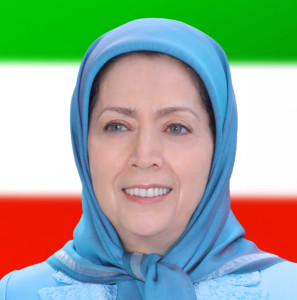
MARYAM RAJAVI’S PROPOSALS TO FIGHT AGAINST ISLAMIC FUNDAMENTALISM IN IRAN
Historical context : The emergence and fundamental principles of fundamentalism in Iran
The emergence of fundamentalism stems from many factors, including social and historical circumstances, as well as policies pursued by the international community.
Major developments in the twentieth century in their own right impacted the formation and rapid advance of fundamentalism. However, none has been as determinative as the rise to power of the reactionary mullahs in Iran. This is particularly the case because the ruling regime in Iran offered, for the first time, a model for fundamentalist groups to follow, the very groups who have now become the source of terrorism and war in the Middle East region and elsewhere.
Is the emergence of fundamentalism, as some assert, a face-off between the Islamic world and the West? More specifically, is this a confrontation between Islam on the one hand and Christianity and Judaism on the other?
The answer is no! In reality, the crux of the conflict is not between Islam and Christianity. Nor is it between Islam and the West, and nor between the Shia and the Sunni. The conflict is over freedom versus subjugation and dictatorship, between equality on the one hand and oppression and misogyny on the other.
Indeed, why do more than all others, fundamentalists direct their vengeance and violence towards women? First, because their backward nature has rendered them misogynous. Second, during the 1979 revolution in Iran and social movements in other Middle East countries, the fundamentalists were challenged and are challenged today with an immense yearning for freedom and equality, which pivots around women’s emancipation.
For this reason, misogyny lies at the core of the fundamentalist mindset, which through the suppression of women, oppresses, and intimidates society as a whole.
The solution: democratic Islam is the antithesis of fundamentalism
Confronting fundamentalism requires a comprehensive solution, including a cultural response.
By invoking the name of Islam, fundamentalism uses this religion as a weapon to go on the offensive.
Thus, the answer is in Democratic Islam, the antithesis to fundamentalism.
I must therefore emphasize that these two phenomena are diametrically opposite one another.
● One is a dictatorial ideology and the other is the religion of freedom, which recognizes sovereignty as a fundamental right of the people.
●One defends religious discrimination; the other is an Islam that defends equal rights for other religions’ followers.
●One is monopolistic and dogmatic; the other is a tolerant Islam, which promotes respect for the belief in other ideas and religions.
●One is a religion imposed through force; the other is an Islam which rejects any compulsion in religion.
By underscoring this reality half a century ago, the People’s Mojahedin of Iran challenged Islamic fundamentalism. Speaking about these two Islams, the Resistance’s Leader Massoud Rajavi said that one interpretation of Islam “is the harbinger of darkness while the other is the standard-bearer of freedom, unity, and emancipation. However, the battle between these two, which is at the same time, a battle of destiny for the Iranian people and history, is one of the most important tests of contemporary humanity.”
Confront the religious fascism ruling Iran and the velayat-e faqih regime
How can this threat be contained? What is the focal point whose collapse will end the whole phenomenon of fundamentalism?
The answer is to confront the religious fascism ruling Iran because the regime is the heart of the problem.
The Iranian regime is the founding state for most of the atrocities and evil that fundamentalist groups have perpetrated and continue to perpetrate using the mullahs’ rule as a role model.
● Indeed, who made stoning to death an official practice in the last two decades of the Twentieth Century?
● Who enacted in law eye-gouging and limb amputation as punishment?
● Who massacred the highest number of political prisoners since the Second World War?
● Who issued a fatwa to murder a foreign author?
● Who revived and used a reactionary caliphate as a role model?
Indeed, it is the velayat-e faqih regime, the godfather of terrorism, the enemy of Middle East nations, and the primary threat to global peace and security.
(Speech on International Women’s Day, Women are the force to confront Islamic fundamentalism, March 7, 2015)
Against a totalitarian government
Religious coercion and compulsion in religion in our time, initiated when Khomeini seized power, is used to eliminate opponents and impose a despotic rule.
As you are aware, Islam at its core is the standard-bearer of brotherhood in the world. This is the truth of Islam and the essence of true Islam. Prophet Mohammad (PBUH) set it as a duty for people to live in peace with followers of other faiths and proponents of other ideas.
Islam as a Religion of Peace and Coexistence
He taught all believers to see their differences as a form of mercy.
On this basis, we argue that the dispute is not between Shiites and Sunnis, not between Christians and Muslims. There is not a war among civilizations. The main dispute and confrontation are between despotism and fundamentalism on the one hand, and freedom and democracy on the other.
Rejecting all forms of compulsion in religion also opens the way for the principle of separation of religion and state and leaves no room for tyranny and religious discrimination under God’s name.
As Massoud Rajavi, the Leader of the Iranian Resistance, said: “Islam thrives only when there is no discrimination, no political privilege and no compulsion in society.”
(Excerpts of speech in Ramadan 2017)
Khomeini’s Fundamentalism: A Drift from Authentic Islam
Khomeini’s ideology is fundamentalism under the veneer of Islam. This ideology is not related to genuine Islam in any way but is a cover under which he has sanctioned the commission of any crime.
The other significant factors in this ideology are the export of religious discrimination, terrorism, and fundamentalism abroad under the banner of revolution, particularly to Muslim countries.
With this ideology, he created a false enmity between Shiites and Sunnis to justify his belligerence against Sunni Muslim countries under the pretext of defending Shiism. However, there are no disputes among Shiites and Sunnis. They have lived side by side in the Middle East in peace and conciliation for many centuries.
The truth is that Khomeini and Velayat-e Faqih are the No. 1 enemy of all Muslims and Shiites. No regime in the world has killed as many Shiites as this regime has.
(Excerpts from a 2018 interview with the Saudi Okaz newspaper)
Liberty Against Submission, Equality Against Oppression
To what is Islamic fundamentalism essentially opposed? As some would have it, is the World of Islam lined up against the West? More specifically, is it a confrontation between Islam on the one hand and Judaism and Christianity on the other?
The answer is no! The reality is that the main dispute is not between Islam and Christianity, neither between Islam and the West nor between Shiites and Sunnis. The dispute is between freedom and submission, between equality on the one hand and oppression and injustice on the other.
Actually, Islamic fundamentalism confronts the overwhelming desire for freedom, democracy, and equality among the people of the Middle East, particularly women and youths.
Enmity towards women : what needs to change
This is where we can find out why Islamic fundamentalism is most vengeful and violent towards women. Because there is a considerable tendency towards modernism, freedom, and equality with women’s emancipation at its core.
(Excerpts from a speech entitled, ‘Women in leadership, the Iranian Resistance’s experience’ – February 26, 2017)
Misogyny is one of Islamic fundamentalist’s main attributes, which turned into a coherent ideology when the mullahs seized power in Iran in 1979. The mullahs’ regime set a concrete model for all fundamentalist groups. The mullahs, Daesh, and the Bokoharam share common fundamentalist beliefs. It does not matter if they are Shiites or Sunnis. They have similar convictions and behavior, including compulsory religion, misogyny, and terrorism.
I must emphasize that it is not enough to confront the ogre of fundamentalism militarily. What is needed is a firm policy and a cultural and intellectual response. There is an effective antithesis to extremism under the veneer of Islam. Genuine Islam promotes tolerance and democracy vs. fundamentalism. Supporting this alternative is indispensable to this fight.
Placing iranian women on an equal position with men is a necessary condition
The ruling regime in Iran is the fountainhead of fundamentalism which foments misogyny. To confront Daesh and uproot fundamentalism, one must end the Iranian mullahs’ occupation of Syria, Iraq, and elsewhere. Women have a pivotal role in this struggle.
Women must have equal status with men; women must have active and equal participation in political leadership. The struggle against fundamentalism will defeat it only when women lead it.
Since three decades ago, women have occupied leadership positions at all levels within the Iranian Resistance movement. This is a new model of women pioneering the struggle for equality at the core of the struggle against fundamentalism.